
GST rate for petrol and diesel cars and hybrid vehicles is already at the highest bracket of 28 per cent plus cess.

Leading two-wheeler maker Hero MotoCorp is going full throttle to launch a Harley-Davidson model with retro styling as it looks to enter a very profitable segment in the premium motorcycle space, according to a senior company official. The alliance between Hero and Harley-Davidson fructified last year after the iconic US two-wheeler maker announced discontinuation of sales and manufacturing operations in India, a decade after it started selling its premium bikes in the country. "There are two legs to the Harley tie up strategy. One of course is that we are the sales distributors for Harley bikes in India.

The electric vehicle evolution in India's passenger vehicle market has remained frozen in time and may see limited adoption over the next decade, experts say.

Ola Electric, India's largest maker of electric scooters, launched its most affordable ride on Tuesday, in an attempt to woo more customers and expand its electric two-wheeler lineup.
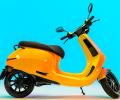
The entry of SoftBank-backed Ola into the electric scooter (e-scooter) segment is set to power up the overall market and perhaps fast-track the adoption of battery-operated vehicles. But for manufacturers of internal combustion engine (ICE)-powered two-wheelers, such as Bajaj Auto, Hero MotoCorp, and TVS Motor, it will be a double whammy. Not only will they have to contend with the aggressive pricing of Ola's scooter and incur a loss at each unit of the e-scooter sold, the volumes of their regular (ICE) models, too, could feel the squeeze, observed analysts. Ola is expected to price its e-scooter in the range of Rs 85,000-1.1 lakh.

Bhavish Aggarwal, the founder of ride-hailing firm Ola who disrupted the electric scooters market in the country, is planning to launch an electric sports car in 2024. The plan will put it in competition with Indian players, such as the Tata group and Mahindra & Mahindra, and global giants like Tesla and Hyundai. Aggarwal, recently, took a group of reporters to the firm's design studio at the Ola campus in Bengaluru where his teams are working on several EVs, including scooters, motorcycles, sedans, and SUVs - and even robotaxis.
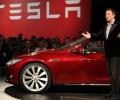
US-based Tesla is working through a lot of challenges with the government to launch its products in India, the electric car major's founder and CEO Elon Musk said on Thursday. Responding to a tweet on the company's plans to launch its products in India, Musk tweeted: "Still working through a lot of challenges with the government." Last year, Tesla had sought a reduction in import duties on electric vehicles (EVs) in India.

India can become the number one automotive manufacturing hub in the world within five years, but auto companies need to enhance safety features to reduce deaths due to road accidents, Union Minister Nitin Gadkari said on Thursday. In his inaugural address at the Auto Expo 2023 here, the minister for road transport and highways asserted that the government's target is to reduce these accidents by 50 per cent before the end of 2024 while asking the auto industry to take suo moto action for road safety as the government doesn't want to make anything mandatory. Gadkari's sentiments were also echoed by Minister of Heavy Industries Mahendra Nath Pandey, who lamented that while India has only 1 per cent of the total overall vehicles, the country accounts for 11 per cent of the total global deaths due to road accidents.
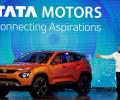
The business will also see a change of guard. Shailesh Chandra, president of EV and corporate strategy, will replace Mayank Pareek as president of PV business, including EV, with effect from April 1. Pareek will be superannuating from the company after a six-year stint at the end of February 2021. Chandra and Pareek will work on transition over the next few weeks.
According to research by IHS Markit, for an ecosystem still grappling with infrastructure issues -- the high cost of EVs and a greater OEM (original equipment manufacturer) focus on electrifying two-wheelers and commercial vehicles first -- the share of such vehicles is expected to be 4 per cent by 2030, reports Pavan Lall.

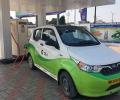
The company, which rents cars by the hour, day, week and month, has Mahindra E2O Plus and Tata E Tigor available on the platform for which it charges a subscription fee of Rs 15,000-20,000 per month.

Japanese auto major Honda Cars on Thursday unveiled its new offering for the Indian market -- City e:HEV sedan, marking its foray into the mainstream strong hybrid electric vehicle segment in the country. The company, which is present in India through a wholly-owned subsidiary, has commenced the bookings of the model and plans to introduce it in the market next month. As per the company, the model, an extension of its City model range, would feature self-charging two-motor strong hybrid system connected to a 1.5 litre petrol engine, entailing a peak power of 126 PS and fuel efficiency of 26.5 km per litre.
The two-wheeler sector has been underperforming its peers on the volumes front for over five quarters now. Even in the March quarter, Bajaj Auto and Hero MotoCorp posted a 17-24 per cent YoY decline in volumes, the sharpest in the listed auto universe. The ongoing impact of frequent price hikes, all-time high fuel prices, and muted rural sentiment has led to the lacklustre showing by two-wheeler makers. What has aggravated the situation for two-wheeler companies, which get almost all their sales from the internal combustion engine or ICE-based units, is the traction for electric two-wheelers (EV).

During the six-day-long event, automakers have planned 10 global launches, 26 India specific launches, six concept vehicles, seven facelifts and 21 vehicle unveilings.

After the Dark edition followed by the Gold and Kaziranga editions, Tata Motors now introduces the Jet experience in select high-end models.
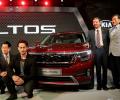
What explains India's love affair with SUVs? They are not exactly "value for money" -- the watchword for brands across segments -- nor always practical. Is it for the badge value? Or the butch imagery associated with SUVs? Maybe both, says Alokananda Chakraborty.

The company, which unveiled its compact multi-purpose vehicle Triber in India, is bringing the MPV only in petrol engine option as part of the strategy even as it prepares to introduce electric vehicles in the near future.

Weak consumer sentiment across urban and rural markets due to slow farm inflows, subdued agri-commodity prices, rising cost of ownership as a result of regulatory changes including safety, emissions, vehicle registration, along with a rise in interest cost/EMI, have impacted demand.

This number is more than the total number (1,071) of electric cars sold in India in calendar year 2019. MG has stopped registrations for the ZS and will cater to 2,409 of the total bookings.
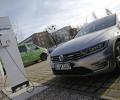
Eyes investments of Rs 31,000 cr in research and manufacturing of electric vehicles
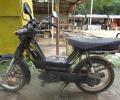
Kinetic Engineering (KEL), the makers of the iconic Luna two-wheelers in the seventies, will soon start producing components for an electric version of the moped. Pune-based Kinetic said in September that Luna would make a comeback in an electric avatar. The electric Luna, or E-Luna, will be launched by KEL's sister company Kinetic Green Energy and Power Solutions.
The Auto Component Manufacturers Association of India on Wednesday sought reduction in GST rate to a uniform level of 18 per cent for the entire automobile industry to stimulate demand and help save around 10 lakh jobs, which are at risk due to prolonged slowdown in vehicle sales.
Automobile retail sales in the country fell 18 per cent year-on-year in the 42-day long festive period this year as semiconductor shortage impacted production across companies affecting their ability to supply adequate numbers to dealer partners, FADA said on Thursday. During the period under review, barring three-wheeler and commercial vehicles, all other segments including passenger vehicles, two-wheelers and tractors were down as compared with the same period of last year. As per data collated by the Federation of Automobile Dealers Associations (FADA), total retail sales across segments stood at 20,90,893 units this festive period, down 18 per cent from 25,56,335 units in 2020.

MSI chairman R C Bhargava said auto sector would like to see GST benefits linked to greener/cleaner cars. The government gave tax cut on EVs but hybrid should be given duty cut. There should be tax cut on CNG vehicles.

RIL subsidiary Reliance New Energy Solar, Ola Electric, Hyundai Global Motors Company and Rajesh Exports have been approved for receiving incentives under the Rs 18,100 crore Production Linked Incentive (PLI) scheme for battery manufacturing in India, sources said on Thursday. "The ministry had received bids from 10 companies with a capacity of 130 GWh. Reliance, Ola Electric, Hyundai and Rajesh Exports have qualified for ACC batteries," a source said. Other companies which had applied for the PLI scheme for Advanced Chemistry Cell (ACC) batteries were Lucas-TVS, Mahindra & Mahindra, Amara Raja Batteries, Exide Industries, Larsen & Toubro and India Power Corporation Limited.
Four companies - Rajesh Exports, Hyundai Global Motors Company, Ola Electric Mobility and Reliance New Energy - are eligible for receiving benefits under the production-linked incentive (PLI) scheme for advanced chemistry cell battery storage, the heavy industries ministry said on Thursday. The allotment was made for a total of 50 GWh of battery capacity to the four successful bidders. These firms, the ministry said, will receive incentives under India's Rs 18,100 crore programme to boost local battery cell production.

The Union Cabinet on Wednesday approved a Rs 26,058 crore production linked incentive (PLI) scheme for auto, auto-components and drone industry to enhance India's manufacturing capabilities, Union Minister Anurag Thakur said on Wednesday. The PLI scheme will incentivize the emergence of advanced automotive technologies' global supply chain in India.

Suzuki will produce EVs for the Indian market and will supply some of them to Toyota, which will provide technical support.

The MG Motor India management is focused on scaling up and launching smaller cars to play the long game in the country, says Pavan Lall.

Ola Electric has finalised its second phase of expansion, under which it will increase its plant capacity fourfold - from 1 million two-wheelers per annum to 4 million. This will also include motorcycles, said a top executive of the company. It will also build a plant with a 5 Gwh of advanced chemistry cell battery storage capacity in the same super factory located on the outskirts of Bengaluru.

Invest in quality companies that make profits, advises stock market expert and rediffGURU Samraat Jadhav.

The investment will be made through a joint venture with Toshiba and Denso. The battery is the most expensive single part of an EV.
Signals received from the government in the past one year reflect a state of utter confusion, says Abhishek Tripathi.

There is also lack of mandate from the government on adoption of electric mobility after ambitious talks of moving all new automobile sales to electric by 2030

After monetising Jio Platforms -- which houses the firm's telecom arm and digital ventures, richest Indian Mukesh Ambani is looking to rope in investors in the retail business.

To attract potential suitors, the government will ease asset valuation norms for Air India by allowing bidders to put in offers on an enterprise value basis, a source said on Monday. To begin with, the government is likely to further extend the deadline for putting in a preliminary expression of interest for the loss-making national carrier to December 15. The source said bids will be sought on an enterprise value basis - a popular valuation methodology for takeover deals.


Increasing the duties on auto parts and putting an additional cess on petrol and diesel could drive up costs of vehicles, specially where volumes are low and localisation is not viable.

India's equity markets are on a roller-coaster ride, after delivering spectacular returns for two consecutive years - in 2020 and 2021. The benchmark National Stock Exchange's (NSE's) Nifty50 is down 1.5 per cent in the first nine months of the current calendar year 2022 (CY22) as foreign portfolio investors sold Indian stocks due to rising bond yields in the US and across global markets, including India. The sell-off in the Indian equity markets has, however, not been broad-based and largely limited to sectors facing earnings headwinds from rising interest rates, lower commodity and energy prices, and likely economic recession in advanced economies.

Ola founder and chief executive officer (CEO) Bhavish Aggarwal will step back from day-to-day operations to focus more on engineering functions, team building, and products, apart from focusing on long-term strategic projects, such as two-wheelers, cars, and innovations in quick commerce and international expansion. "I'll be spending more time with all engineering functions, team building, and on products," said Aggarwal in an internal note, adding, "I'll also be increasing my focus on our longer-term strategic projects, including new two-wheeler products, our car project, innovations in quick commerce, electrifying ride-hailing, our cell research and development (R&D), international expansion, building our Pune technology (tech) centre, and Futurefoundry UK." To drive scale, speed, and quality, Aggarwal said he is expanding Ola Group's chief financial officer (CFO) G R Arun Kumar's role to help him steer 'day-to-day operations' across the group.
